Marrakech Travel Guide: Everything You Need to Know Before You Visit
Marrakech is where most people’s first trip to Morocco begins, and for good reason. It’s the city that condenses everything travelers come here for - a medieval walled Medina, some of the best food in the country, mountain views on a clear day, and the Sahara only a few hours away. It’s also chaotic, loud, and easy to get overwhelmed by if you land with no plan.
This guide covers everything you need to know before you go: when to visit, where to stay, what to actually do (beyond the souks everyone photographs), what to eat, and the practical details - money, safety, getting around - that make the difference between a smooth trip and a stressful one.
Getting to Marrakech
Marrakech Menara Airport (RAK) is the main gateway for most international visitors and sits only about 15 minutes from the city center, which makes it one of the more convenient major airports in North Africa. From the airport you have three realistic options: a metered petit taxi, a pre-booked private transfer, or your riad arranging a pickup for you.
If you’d rather not negotiate a fare at 6am after a red-eye flight, we’ve written a full breakdown of every transfer option, with real prices, in our Marrakech airport transfer guide.
Best Time to Visit Marrakech
Marrakech has a desert-edge climate, which means the difference between visiting in July and visiting in January is dramatic.
- Spring (March-May): The best overall window. Warm days, cool evenings, and the Atlas Mountains are still snow-capped in the background - genuinely the most comfortable and photogenic time of year.
- Autumn (September-November): A close second. Temperatures ease off after summer, and it’s noticeably quieter than spring.
- Summer (June-August): Hot - regularly 38-42°C (100-108°F) in the city. Doable if you plan around it (early mornings, air-conditioned riads, pool time in the afternoon), but not ideal for heavy walking days in the Medina.
- Winter (December-February): Mild and sunny in the daytime (18-20°C), but nights get cold, and riads built around open courtyards aren’t always well-heated. Pack layers.
Where to Stay: Medina vs. Gueliz
This is the single biggest decision that shapes your trip.
The Medina (old city) is where you want to stay if you’re after atmosphere - narrow alleyways, rooftop breakfasts, and a traditional riad experience just steps from Jemaa el-Fnaa. The trade-off is noise, and navigating on foot (cars can’t enter most of it) takes some getting used to on day one.
Gueliz (Ville Nouvelle) is the modern, French-built part of the city - wider streets, more international restaurants, and easier for taxis and ride-hailing. It’s a good fit if you want a quieter base and don’t mind a short taxi ride into the old city each day.
Most first-time visitors are happiest splitting the difference: a riad in or near the Medina for 3-4 nights to soak in the atmosphere, since that’s usually what people picture when they imagine a trip to Marrakech.
Top Things to Do in Marrakech
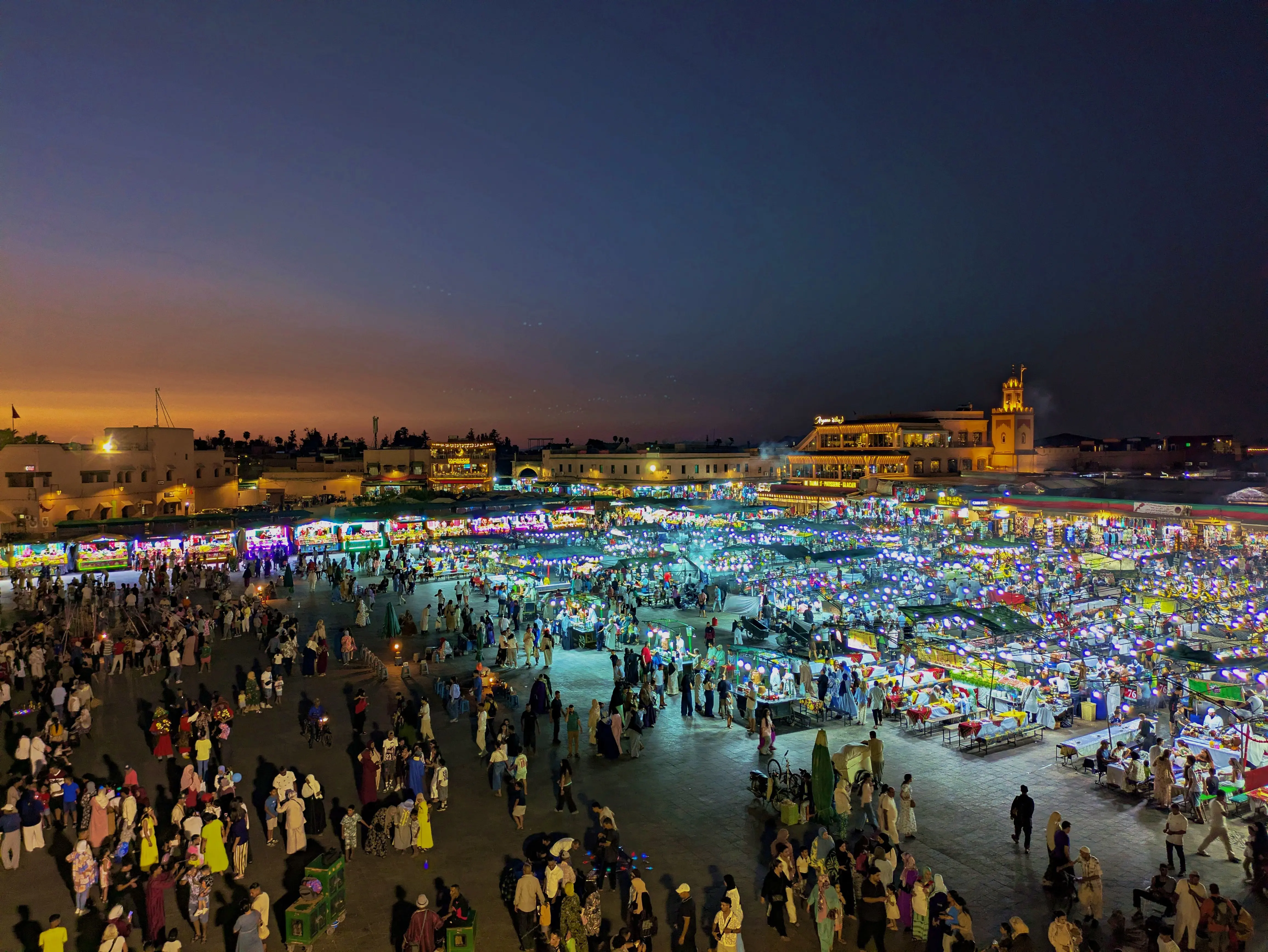
Jemaa el-Fnaa - The main square, and genuinely worth visiting twice: once in daylight for the orange juice stalls and snake charmers, and again after sunset when the food stalls take over and the whole square turns into an open-air night market.
The Souks - The market maze north of Jemaa el-Fnaa, organized loosely by trade (leather, metalwork, textiles, spices). Bargaining is expected - start at roughly a third of the asking price and work up. If you’re after handmade rugs specifically, we’ve put together a buyer’s guide to Moroccan rugs covering how to tell quality from a tourist markup.
Jardin Majorelle - A small but stunning botanical garden, restored by Yves Saint Laurent, with cobalt-blue buildings against cacti and bamboo. Book your ticket online in advance - it sells out most mornings.
Bahia Palace - A 19th-century palace with some of the most intricate tilework and carved cedar ceilings in the city. Less crowded than the souks and a good midday break from the heat.
Koutoubia Mosque - Non-Muslims can’t enter, but the surrounding gardens and the view of the minaret (the model for Seville’s Giralda tower) are worth the short walk from Jemaa el-Fnaa.
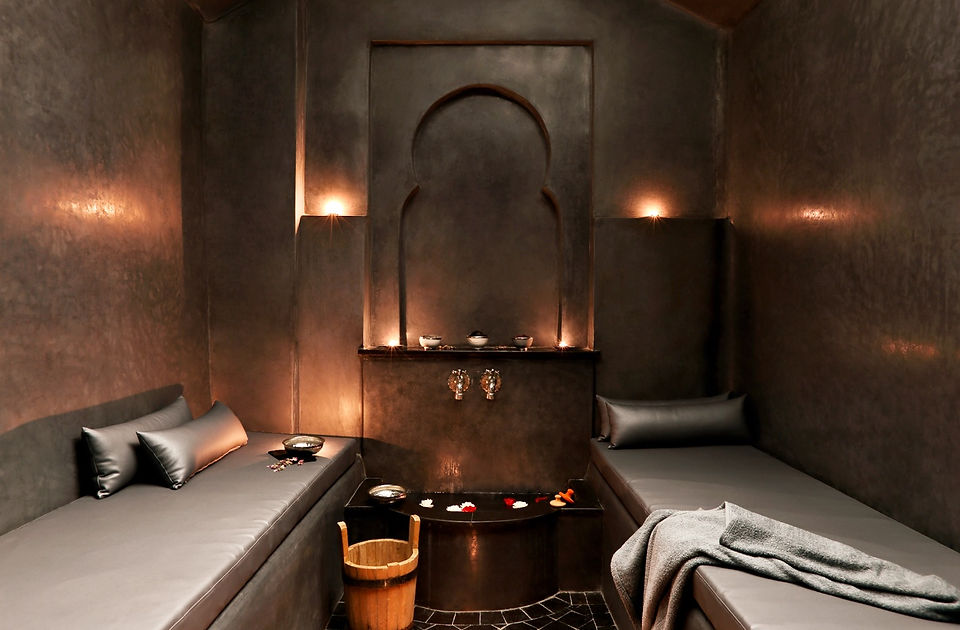
A hammam - A traditional steam bath and scrub, either at a simple neighborhood hammam or a spa version at your riad. Either way, it’s one of the most genuinely local experiences available to visitors.
Day trips - Marrakech is also the launch point for the Atlas Mountains (day hikes or a visit to a Berber village) and for multi-day Sahara Desert tours. If a desert trip is on your list, our Sahara desert tours guide covers routes, what to expect, and how to choose an operator.
What to Eat in Marrakech
Moroccan food is one of the most underrated cuisines for travelers, and Marrakech is a good place to try most of it in one trip:
- Tagine - slow-cooked stew, usually lamb, chicken, or vegetable, named after the conical clay pot it’s cooked in.
- Couscous - traditionally a Friday dish, served with a rich vegetable and meat broth.
- Pastilla - a sweet-and-savory pastry, traditionally filled with pigeon (chicken versions are common too).
- Mint tea - offered everywhere, always, as a gesture of hospitality - worth reading a little about the ritual behind it in our guide to Moroccan mint tea.
If you want to cook any of these once you’re home, our recipes section has step-by-step versions of the lamb tagine and several other classics.
Practical Tips
- Currency: The Moroccan dirham (MAD). Cash is still king in the souks; cards work in most riads, restaurants, and malls.
- Language: Arabic and Amazigh (Berber) are official languages; French is widely spoken as a second language, and English is common in tourist-facing businesses.
- Dress code: Marrakech is relatively liberal by Moroccan standards, but modest dress (shoulders and knees covered) is appreciated, especially in the Medina and at religious sites.
- Bargaining: Expected in the souks, not expected in fixed-price shops, restaurants, or with metered taxis.
- Safety: Marrakech is generally safe for tourists, including solo travelers. The most common issue is overly persistent vendors or unofficial “guides” in the Medina - a polite but firm “no, thank you” is usually enough.
- Getting around: Petit taxis (small, metered, for up to 3 people) are the easiest way to move between the Medina and Gueliz. Agree on a price or ask for the meter before you get in.
Frequently Asked Questions
How many days do you need in Marrakech? Three to four days is enough to see the main sights at a comfortable pace, with time left over for a hammam or a day trip. If you’re planning to add a Sahara tour, budget at least two extra days for that on top.
Is Marrakech worth visiting if I don’t like crowds? The Medina and Jemaa el-Fnaa are busy, especially in the evening - that’s part of the experience. If you want quieter moments, early mornings in the souks, the gardens, and Gueliz’s cafes offer a real change of pace.
Do I need to speak French or Arabic? No - English is widely understood in hotels, restaurants, and shops that deal with tourists, though a few basic French or Arabic phrases go a long way with locals.
Marrakech rewards a bit of planning more than most cities - know where you’re staying, roughly what season you’re arriving in, and you’ll spend your trip enjoying it instead of adjusting to it. From here, the Atlas Mountains and the Sahara are both within easy reach if you want to extend the trip beyond the city.